Paper-weaving Painting
Introduction
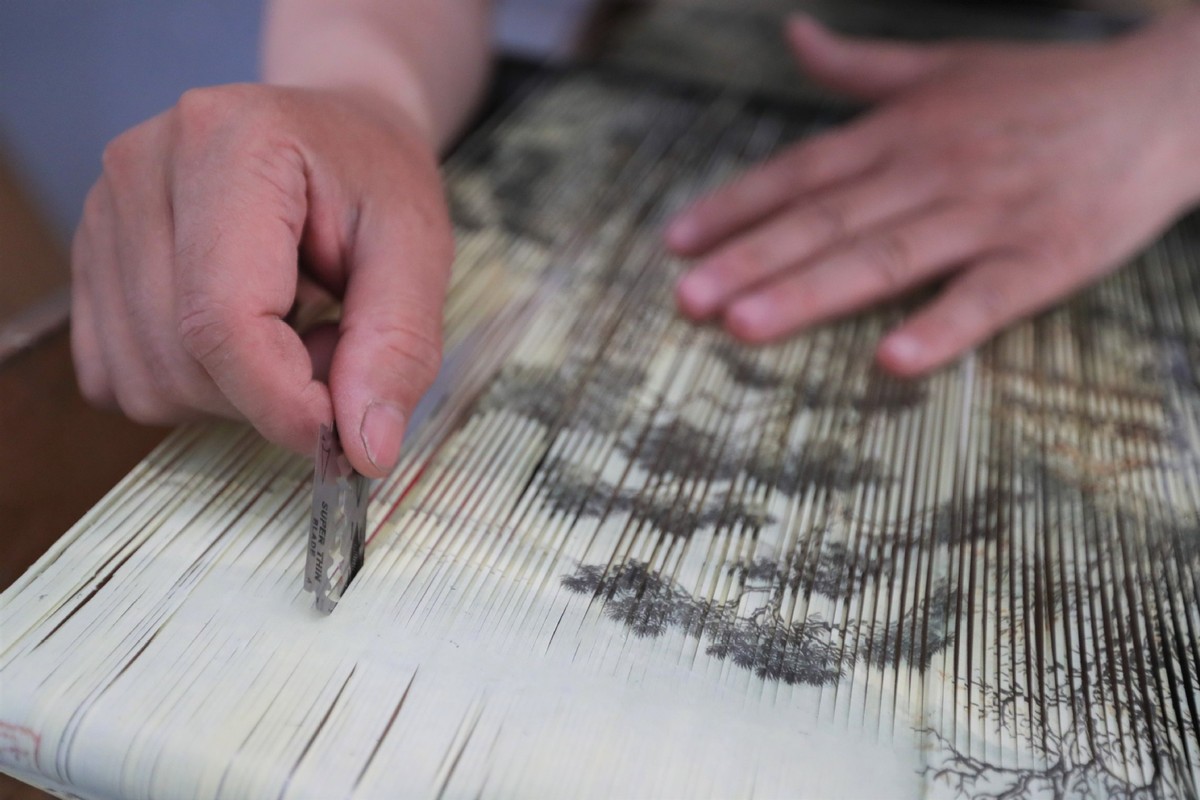
Paper-weaving painting is a traditional art form with a rich history, particularly celebrated in Gansu, China. This intricate craft is characterized by the delicate interweaving of columns and rows, resulting in a seamless composition where individual pieces of the painting are virtually indistinguishable. The process involves cutting an ink painting into thin strips, typically 2 millimeters wide, which serve as the "longitudes" of the weaving. Similarly, plain rice paper is prepared in the same manner and used as the "latitudes." These strips are then meticulously woven together to create a unified and visually striking painting.
This unique art form requires exceptional skill and precision, as the weaving technique ensures that the original painting and the rice paper strips blend harmoniously. The result is a piece of artwork that not only showcases the beauty of the original painting but also highlights the craftsmanship of the weaving process. Paper-weaving painting is a testament to the creativity and dedication of artisans who preserve this traditional technique.
The craft gained further recognition and innovation through the efforts of Wei Wei, an artisan who first encountered paper-weaving paintings in 1983. After years of practice and refinement, Wei developed a novel style of paper-weaving painting that incorporates gold paper as the "latitudes." This innovation added a new dimension to the art form, enhancing its aesthetic appeal and elevating its status within the realm of traditional crafts. The creation of gold paper-weaving paintings involves a meticulous 16-step process, including brushing the paper with gold, trimming, sorting, weaving, and framing.
Gold paper-weaving painting has been officially recognized as an intangible cultural heritage in Pingliang city, highlighting its cultural significance and artistic value. Wei Wei has played a pivotal role in preserving and promoting this art form, training over 50 apprentices to ensure its continuation. His dedication to the craft and his efforts to pass on the knowledge to future generations reflect the importance of safeguarding traditional arts and crafts for posterity.








